Tianxin · 天心
生活實修學苑
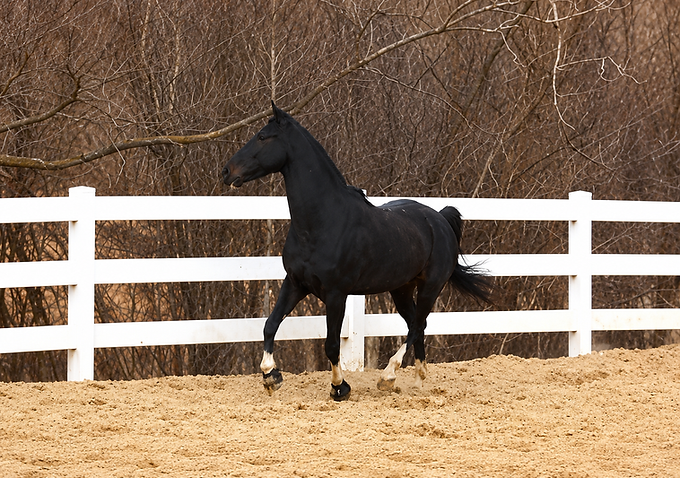
夏玛,我的第一匹马,一匹田纳西走馬。
我們如何看見真正的真相?
Shyama
When the Body Tells the Truth
The Door That Never Closed
The school bus was stuck in traffic.
Then, suddenly, a horse appeared outside my window.
A young man rode calmly through the middle of the city. Cars surrounded him. Horns echoed from every direction. Yet the horse never hurried, never flinched.
His hooves touched the pavement with a light, rhythmic sound, like tiny bells ringing only for me.
I never learned where that horse came from, or where he disappeared to after that day.
But I never forgot him.
Years later, after decades of sculpting had left me with nine bone spurs in my spine, I found myself back at a riding stable. I wasn't there for myself at first. I was simply waiting while a young girl I cared for took riding lessons.
Each week I sat in the same folding chair beside the arena.
Until one day, I climbed onto a horse myself.
As the horse moved beneath me, my body began to move with him. The gentle rhythm loosened something that years of treatments, therapies, and adjustments never had.
Only then did I realize that the horse outside my childhood bus window had never really left me.
He had simply opened a door that I wasn't ready to walk through.
Years later, that door led me to Shyama.
Beneath the Calm
The man selling Shyama showed me several videos.
They were meant to reassure me.
In one, Shyama walked quietly through a busy parade in downtown Chicago. Crowds surrounded him. Traffic rolled past. Nothing seemed to bother him.
A veterinarian later estimated he was around seven years old.
No one actually knew.
When I met him, the seller rode him first so I could see what kind of horse I was buying.
He rode beautifully.
But from beginning to end, he carried a riding crop.
Everything looked calm.
Yet beneath that calm, I could feel Shyama trembling.
His coat was black as midnight, with four white socks.
He floated beneath the rider like a flying carpet.
The elegance of his movement did not match what his body was quietly saying.
I bought him anyway.
Not because I overlooked the trembling.
Because I couldn't.
Something inside me trusted the trembling more than the performance.
A Different Horse
Once Shyama came home with me, almost everything was different from the horse in the videos.
On the ground, he was curious and playful, almost like a young puppy.
But the moment I pointed him toward the woods, fear overwhelmed him.
Standing still, he was nearly perfect.
Being ridden was another story.
Money was tight, but I hired someone who specialized in both hoof care and equine behavior.
One afternoon she watched a stable worker walk past.
Without warning, Shyama exploded into panic.
He threw himself against the cross-ties so violently that he nearly broke free.
It wasn't the first time.
And strangely, it happened only when that particular person appeared.
She looked at me and quietly said,
"Animals don't lie."
I never forgot those words.
What the Body Remembers
I didn't fully understand what she meant until one ordinary morning.
I picked up a manure fork and walked toward Shyama.
He collapsed into terror.
His whole body shook.
The whites of his eyes flashed.
In that instant, the tool in my hands was no longer a manure fork.
To him, it had become something else entirely.
Later I learned that his stall had gone long periods without being cleaned. Layers of manure and bedding had hardened into the floor itself.
When I asked why, people told me,
"No one could get near him."
But that wasn't the whole story.
He had lived there for over a year before everything changed.
For a long time I couldn't truly reach him.
I certainly couldn't ride him.
Slowly, though, another understanding began to grow.
Animals do not need words to tell us what happened.
Fear settles into breathing.
Into muscles.
Into posture.
Into the instant a particular person, object, or movement appears.
Calm can be trained.
Obedience can be trained.
But the body remembers.
My Own Mistake
Before I learned how to protect him, I made one more mistake.
Someone recommended a trainer who promised he could solve Shyama's refusal to be ridden.
The first two sessions seemed successful.
On the third day, Shyama refused to step toward the mounting block.
The trainer began striking him.
Again.
And again.
The whip fell like a sudden storm.
I stood in the mud and cried.
Shyama never fought back.
He simply froze.
His body remained standing.
But his eyes seemed to disappear somewhere far beyond the arena.
It wasn't calm.
It was a place where there was nowhere left to run.
That was the last time I ever handed him to someone else.
Choosing to Believe Him
That week changed my life.
I began reading everything I could find.
I sought out anyone willing to teach me.
Because at that point, nothing mattered more than understanding Shyama.
Slowly, the scattered pieces began fitting together.
Why he behaved perfectly on the ground but panicked under saddle.
Why one person's presence could make his whole body shake.
Why a riding crop could close a door that might take years to reopen.
At first I thought my job was to fix a horse.
Eventually I realized my responsibility was something very different.
I had to stop asking him to prove he was healed.
I had to believe what his body was telling me.
Believe his fear.
Believe the memories no document mentioned, no video revealed, and no one wanted to acknowledge.
Real trust is not convincing a wounded life to obey again.
Real trust begins the moment someone finally shows you their fear...
...and you choose to believe it.
The Land Beneath the Farm
Someone told me Shyama should never live alone.
So I drove across three states looking for companions.
Eventually we found two more horses.
Around that same time, my father passed away.
Part of what he left behind became the beginning of something entirely new.
It allowed me to buy a piece of land.
Three horses stepped off the trailer together onto the property that would become their home.
Shyama was no longer alone.
Neither was I.
That was the beginning of Lake Sai Farm.
At first, I thought I was simply buying land for horses.
Looking back, I realize I was building something else.
A place founded on one simple promise:
Never judge a life by how well it performs.
Look beneath the performance.
Listen beneath the silence.
Trust what a living being is trying to tell you.
What Shyama Taught Me
The world is quick to believe appearances.
A polished video.
An experienced trainer.
A horse that stands quietly.
A person who keeps functioning.
We often assume that if someone can still perform, they must be fine.
Shyama taught me otherwise.
Sometimes the calmest surface hides the deepest trembling.
And sometimes that trembling is closer to the truth than the version everyone else chooses to believe.
Animals do not lie.
Their bodies bear witness to stories that words cannot tell.
Once you truly see that, you stop asking,
"How can I make this life perform better?"
Instead, you begin asking,
"What has this life lived through?"
"What does it need now?"
"Am I willing to believe it?"
Lake Sai Farm was built on that question.
And in many ways, so was the rest of my life.