Tianxin · 天心
Living School of Practice

Suhela Ling-An Fang · 房凌安
Artist · Author · Educator · Intuitive Practitioner
Founder of Tianxin 天心 and Lake Sai Farm
The Story Behind Tianxin
I grew up believing everyone experienced the world the way I did.
I thought everyone could hear what I heard, see what I saw, and sense what moved quietly beneath ordinary life. I never imagined my inner world was different. It was simply the world as I knew it.
As a child, I often became ill with sudden fevers. During those times, my grandmother would practice 收驚 (shōu jīng), a traditional Taiwanese ritual for calling a frightened child's spirit home.
She would slowly make her way to the front door carrying a simple soup ladle.
My grandmother's feet had been bound when she was a little girl. I still remember watching her walk—each step small, careful, and difficult. She would strike the wooden door three times and call,
「凱哩啊,回來喔,回家來喔。」
"Ling-An, come back. Come home."
She wasn't calling me back into the house.
She was calling me back to myself.
At the time, I didn't understand why she did this. I only wondered why she had to make that painful walk again and again for me.
Looking back, I realize she never questioned what I experienced. She simply met the unseen with love instead of fear.
That became one of the earliest gifts of my life.


As I grew older, I slowly realized that not everyone experienced the world as I did.
I was raised in a culture that valued achievement, speed, and accomplishment. Yet my attention kept returning to quieter things—to animals, symbols, dreams, emotions, and the invisible threads that connect living beings.
For many years, the question wasn't how to develop these perceptions.
It was how to remain myself while living in a world that often measured success very differently.
Art became one place where the visible and invisible could meet. Later, I moved to the United States to study, eventually earning my Bachelor of Fine Arts and Master of Fine Arts. Along the way I explored many paths—art, education, meditation, Reiki, Akashic Records, Spiritual Response Therapy, and other contemplative traditions.
Each offered part of the picture.
None became the whole story.
The greatest teachers arrived on four legs.
Animals never asked me to explain what I sensed.
They responded to presence, honesty, patience, and relationship.
A frightened horse could not be rushed into trust.
A dog did not care about titles or accomplishments.
An animal in pain asked only for my full attention.
Living alongside them changed me.
They taught me that love is not simply a feeling. It is responsibility. It is listening. It is showing up every day.
Most importantly, they grounded me.
What once felt like unusual perception slowly became a way of living more fully on the earth.
Over time, these threads naturally came together.
Art.
Animals.
Relationship.
Spiritual inquiry.
Nature.
Daily life.
Together they became Tianxin (天心).
Tianxin may be translated as Heavenly Heart, but to me it points toward something deeply human—the original heart beneath fear, conditioning, and expectation. The part of us that still recognizes truth, compassion, dignity, and our belonging with all life.
Tianxin was never created as a method.
It grew from a lifetime of listening.
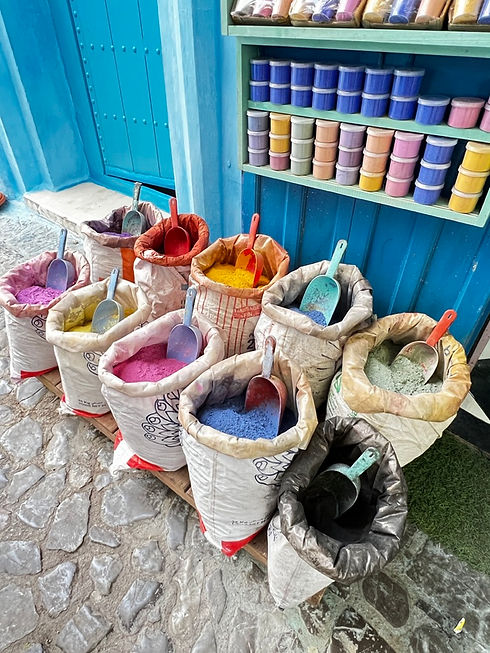

Today, Tianxin unfolds through several living doorways. Whether you are seeking deeper understanding, a creative path back to yourself, or a more meaningful relationship with animals and the living world, you are welcome here.
If one of these doorways speaks to you, begin there.
Private Readings
Explore soul contracts, relationships, animals, life transitions, and the deeper patterns beneath everyday experience.
Heart Color Academy
Art, symbol, perception, and creative practice as pathways back to yourself.
Sanctuary
Meet the sanctuary and the animals whose lives continue to shape Tianxin every day.
The Library
Books, essays, podcasts, and the Tianxin Animal Stories in English and Traditional Chinese.
About
Suhela Ling-An Fang 房凌安 is a Taiwanese-American interdisciplinary artist, bilingual author, educator, intuitive practitioner, and founder of Tianxin and Lake Sai Farm. She holds a BFA from Temple University and an MFA from the University of Illinois Chicago, and works in English and Traditional Chinese. Her life and practice bring together art, animals, spiritual inquiry, education, writing, and the daily stewardship of more than one hundred animals in North Georgia.
Art and life Gallery


